

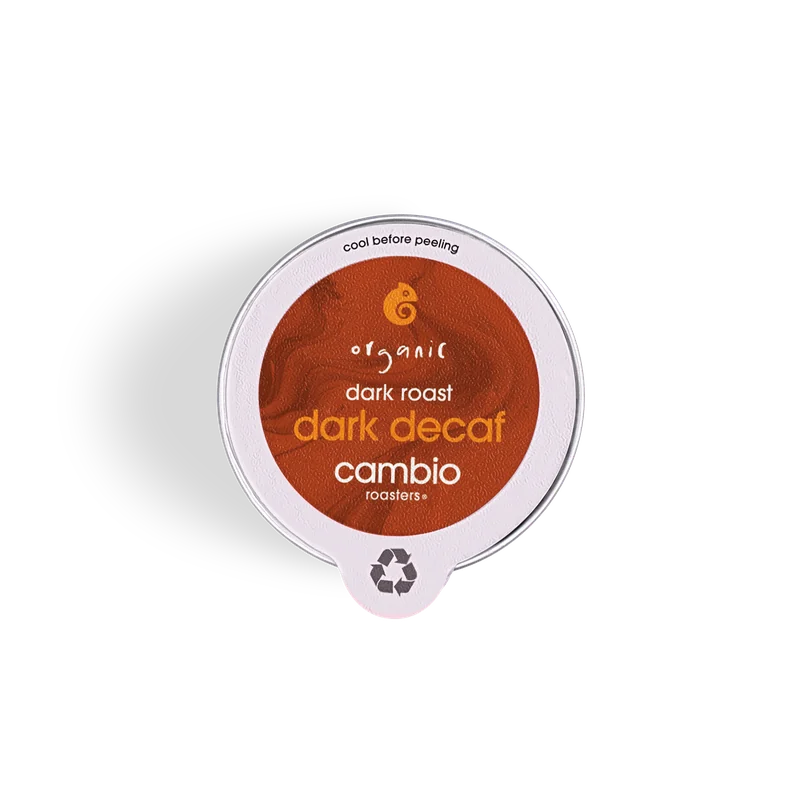


Quick Answer: Sustainable coffee pods are single-serve capsules made from infinitely recyclable material (aluminum, not plastic), filled with responsibly sourced coffee, and packed in recyclable cartons. Our pods are plastic-free aluminum, Keurig® compatible, and filled with 100% organic, small-batch roasted coffee. The material difference matters: roughly 75% of all aluminum ever produced is still in use today, while only 8.7% of plastic generated in the United States is recycled.
Here is the uncomfortable truth about your morning cup. The coffee inside your pod is a miracle of agriculture, altitude, and decades of farming knowledge. The container it arrives in usually outlives the person who drank from it.
That gap is what we set out to close at Cambio Roasters®. Not with a slogan. With a material change, a sourcing change, and a packaging change that we can point to and prove.
What Makes a Coffee Pod Actually Sustainable?
A pod is sustainable when three things are true at once: the material can genuinely re-enter the supply chain, the coffee inside was grown by farmers who were treated fairly, and the box it shipped in does not become a second waste problem.
Most claims in this category only cover one of the three. A capsule labeled "recyclable" that requires you to disassemble it into four components before your municipal program will accept it is not solving anything at scale. Neither is a compostable capsule that only breaks down in an industrial facility your city does not operate.
We built our plastic-free, recyclable aluminum K-Cup® compatible pods around a simpler premise. Use a material that recycling infrastructure already wants, already accepts, and already profits from handling. Aluminum is that material. It has been for a century.
Why Does the Material of Your Coffee Pod Matter So Much?
Because material determines what happens on day 30,000, not day one.
Aluminum is what engineers call infinitely recyclable. Melt it down, and it comes back with its properties intact. There is no meaningful quality loss between the first life and the fiftieth. According to the Aluminum Association, around 75% of all aluminum ever produced is still circulating in the economy right now, and recycling aluminum takes roughly 5% of the energy required to make it from raw ore. That is a 95% energy reduction for the same finished material.
Plastic works the opposite way. Every reprocessing cycle shortens the polymer chains and degrades performance, which is why most plastic that does get recycled becomes a lower-grade product rather than a new version of itself. It downcycles. Then it stops.
How Do We Source Coffee That Supports Farming Families?
We buy 100% organic beans from small farms in some of the world's best growing regions, and we back that purchasing with direct support for the families who grow them.
Sustainability in this industry is often framed as an environmental story only. It is also an economic one. A significant share of coffee-farming households live below the global poverty line, and the households growing one of the world's most traded commodities are frequently the ones facing seasonal food insecurity during the months between harvests.
That is why we partner with Food 4 Farmers, an organization that works with coffee-growing communities to build local food hubs, diversify farm income, and reduce dependence on a single annual coffee check. Food security first. Yield second. The order matters.
What Does Farm-Level Biodiversity Have to Do With Your Cup?
Everything, and sooner than most people expect.
Organic farming without synthetic fertilizers, pesticides, or GMOs keeps soil biology intact, and healthy soil is what allows a farm to survive a bad weather year. Diversified plots with shade trees and secondary food crops do the same thing for the family. When we say sustainable coffee, we mean coffee that will still be growable on that specific hillside in 2050.
You can read more about how we source and small-batch roast our beans, including why we score in the mid-80s to low-90s on the specialty scale rather than settling for commodity-grade lots.
What Are We Doing About Packaging Beyond the Pod?
Solving the capsule and then shipping it in a plastic-lined bag would be a hollow win, so we designed the carton with the same standard we applied to the pod.
Our cartons are built for recyclability, printed with the circular economy in mind, and shaped to reduce material rather than maximize shelf presence. The design work behind it earned award-winning packaging design recognition, which we mention less for the trophy and more for the point it proves: eco-friendly coffee pods and beautiful design are not opposing forces. We were also named the #4 Most Innovative Company in Consumer Goods by Fast Company in 2026.
Our commitment extends past our own supply chain too. Since 2017, our partner 4ocean has removed close to 38 million pounds of plastic from the world's oceans and coastlines, and every purchase supports that work.
Does Sustainable Coffee Mean Giving Up Flavor?
No, and in our case the sustainable choice is also the fresher one.
Aluminum blocks light and oxygen, the two forces that stale coffee fastest. A plastic capsule is permeable by comparison, which means the coffee inside begins degrading from the moment it is sealed. Our pods keep the roast profile locked in, which is exactly why premium capsule brands worldwide have used aluminum for nearly 40 years.
Inside every pod sits a paper filter and an FDA-approved food-grade liner, so your coffee never contacts the aluminum itself. No metallic taste. No compromise. Just organic coffee blends roasted in small batches to a specification our coffee curator sets for each origin.
Sustainability that costs you flavor does not last, because people quietly go back to what tastes better. We built the plastic-free coffee pods we wanted to drink every morning ourselves.
How Can You Brew More Sustainably at Home?
Start by changing what you buy, then change what you do with it.
Choose the best organic coffee pods made from a material your local program already accepts, then rinse and recycle the pod after brewing rather than tossing the whole thing. Compost the used grounds if you have a garden, since spent coffee is excellent nitrogen for your soil. Descale your brewer twice a year so it heats efficiently instead of drawing extra power. Buy in larger counts to cut shipping trips.
None of these moves are dramatic on their own. Multiplied across the tens of billions of single-serve cups brewed annually, they become the entire story. If you have questions about how our pods work with your machine, our frequently asked questions page covers compatibility and recycling steps in detail.
Where the Sustainable Coffee Industry Goes Next
The next decade of coffee will be decided by companies willing to redesign the parts of the business that customers never see.
We are a triple-bottom-line company, which means people and planet sit alongside profit in every decision we make, not in a paragraph at the bottom of an annual report. That is the standard we hold ourselves to, and it is the reason our story starts with a material problem rather than a marketing brief.
Here is the takeaway worth carrying into your next grocery run. You are not choosing between a good cup of coffee and a good decision. That tradeoff was always a false one, invented by supply chains that had not been rethought yet. Sustainable coffee pods can taste better, brew identically, and leave a fraction of the footprint.
Ready to make the switch? Explore our responsibly produced aluminum coffee pods and taste what happens when the container finally deserves the coffee inside it.
Frequently Asked Questions
Are aluminum coffee pods actually recyclable in curbside programs?
Yes, in most U.S. municipalities. Aluminum is one of the most valuable materials in the recycling stream, which is why programs actively want it. Give the pod a quick rinse and place it in your curbside bin. Check your local guidelines, since a small number of programs set minimum size requirements for loose metal items.
Do sustainable coffee pods work in a regular Keurig® machine?
They do. Our pods are Keurig® compatible and brew exactly like a standard plastic capsule, with no adapter, no reusable holder, and no change to your routine. Drop it in, close the lid, brew.
Does coffee taste different in an aluminum pod?
It tastes fresher. A paper filter and an FDA-approved food-grade liner separate the coffee from the aluminum entirely, so there is no metallic note. Because aluminum blocks light and oxygen far better than plastic, the roast holds its aromatics longer between packing and brewing.
What makes a coffee brand sustainable beyond the packaging?
Sourcing and farmer economics. Look for organic growing practices, direct or transparent supplier relationships, and concrete programs addressing farmer income and food security. Packaging is the visible half of sustainability. What happens on the farm is the half that determines whether coffee is still viable in thirty years.
Are eco-friendly coffee pods more expensive?
Not meaningfully, and the gap continues to narrow as recycled aluminum supply grows. We price our pods to compete with mainstream single-serve options, because a sustainable choice only changes the industry if ordinary households can actually afford to make it every single morning.