


Quick Answer: Low-acid coffee pods are single-serve capsules filled with coffee that produces a smoother, less irritating cup, usually through darker roasting, origin selection, and freshness protection. Roasting is the biggest lever: chlorogenic acid content drops steadily as roast degree increases, and peer-reviewed research found a dark roast blend stimulated less gastric acid secretion than a medium roast. Our Special Dark, French Roast, and Sumatran pods are the smoothest options in our lineup, sealed in aluminum that blocks the oxygen that makes coffee taste sharp and sour as it ages.
Most people who quit coffee do not quit because they stopped loving it. They quit because of what happened twenty minutes later.
We have heard that story from customers more times than we can count. The ritual they looked forward to every morning turned into something they braced for. And almost every one of them assumed the problem was coffee itself, when the actual problem was usually the roast, the freshness, or the brew ratio in their machine.
That is fixable. Here is exactly how.
What Makes a Coffee Pod Low-Acid?
Low-acid coffee pods are made from beans and roast profiles that carry fewer of the compounds most associated with stomach irritation, then packaged to keep them that way.
Three factors do the heavy lifting. Roast level comes first, because heat chemically breaks down the acids present in green coffee. Origin and processing come second, since growing region, varietal, and how the cherry is processed all shape a bean's acid profile. Freshness comes third and gets ignored the most, which is a mistake, because stale coffee tastes sharper and more sour than the same coffee did the week it was roasted.
What does not make coffee low-acid is chemical treatment. Some products strip acidity with steaming processes or additives. We do not, because those methods tend to strip flavor along with the acid and leave you with something flat. We build our low-acid coffee pods the slow way, through bean selection and roast control, so smoothness is a property of the coffee rather than something applied afterward.
Why Does Roast Level Change How Coffee Feels in Your Stomach?
Because roasting physically destroys the acid compounds, and the darker you go, the less of them survive.
Green coffee is loaded with chlorogenic acids, the family of compounds that gives light roasts their bright, tangy character.
A 2024 study published in the journal Foods found that chlorogenic acid "is decomposed during the roasting process; hence, its content decreases with increasing roasting degree," to the point where at high roast levels the researchers could no longer detect it in their analysis at all. You can read the full open-access study on coffee pH and chlorogenic acid if you want the raw measurements.
There is a second, more interesting finding. Roasting does not only remove acids. It creates compounds that appear to work in the opposite direction. Research published in Molecular Nutrition & Food Research found that a dark brown roast coffee blend was less effective at stimulating gastric acid secretion in healthy volunteers than a medium roast market blend, with N-methylpyridinium, a compound formed during darker roasting, identified as a likely contributor.
Translation for your morning: the roast that sounds heavier is usually the one that sits lighter.
Which of Our Blends Are Best for Sensitive Stomachs?
If you are switching to low-acid coffee for acid reflux or general stomach sensitivity, start dark and work your way back toward the middle until you find your line.
Our Special Dark and French Roast sit at the gentle end of our range, both deep and chocolatey without the sour bite that pushes people away from coffee. Our Sumatran dark roast coffee pods are the pick if you want earthy and full-bodied, since Sumatra's wet-hulled processing method naturally produces one of the lowest-acid, heaviest-bodied cups in the coffee world.
From there, our Colombian and House Blend Medium Roast coffee pods give you more sweetness and nuance while staying well clear of the bright, acidic end of the spectrum. Our Decaf is a medium roast as well, and worth knowing about, because caffeine itself can relax the lower esophageal sphincter in some people. If your discomfort shows up as reflux specifically rather than general stomach upset, decaf is a variable worth testing on its own.
Our limited edition Half-Caff pods are available now while supplies last as a medium-dark roast, which splits the difference nicely for anyone cutting caffeine without cutting the ritual.
How Does Pod Freshness Affect Acidity?
More than almost anyone realizes, and this is where the pod itself starts to matter.
Coffee degrades through oxygen exposure. As it stales, the flavor compounds that gave it balance fade first, and what remains reads as sour, papery, and sharp on the palate. You can take a genuinely smooth dark roast, let it sit in a permeable container for six months, and end up with something that tastes acidic even though the underlying chemistry barely changed.
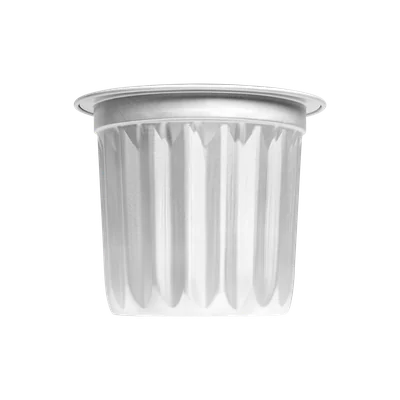
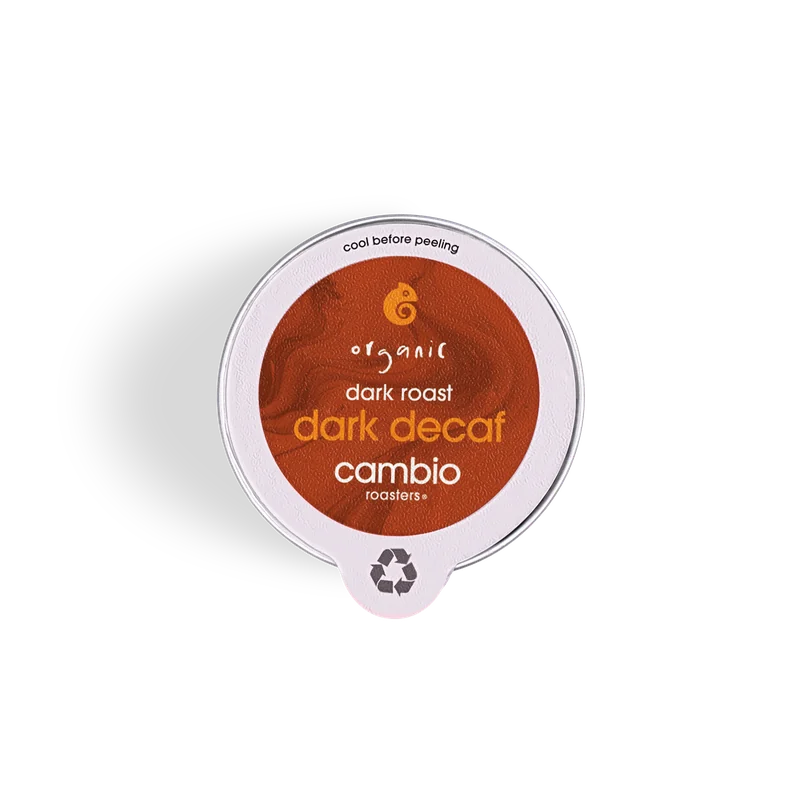
Our recyclable aluminum K-Cup® compatible pods exist partly for this reason. Aluminum blocks light and oxygen far more effectively than plastic, which means the coffee you brew tastes like the coffee we roasted. It is the same reason premium capsule producers worldwide have used aluminum for close to four decades. Inside each pod, a paper filter and an FDA-approved food-grade liner keep your coffee from ever touching the metal, so there is no metallic note in the cup.
We pair that with small-batch roasting rather than automated mega-batches, which you can read more about on our page covering how we source and roast our organic Arabica beans.
How Should You Brew Low-Acid Pods for the Smoothest Cup?
Your brewer settings can undo a good roast, so this part is worth thirty seconds of attention.
Brew on the 8 oz setting or lower. Pushing more water through the same amount of grounds over-extracts the coffee and pulls out the harsh, bitter compounds that arrive late in extraction, then dilutes the body that would have balanced them. If you have a Keurig® 2.0 with a strong setting, use it, because the slower flow builds a fuller cup rather than a thin, sharp one.
Descale your brewer every three to six months. Mineral scale drops your brew temperature, and under-temperature water extracts sourness before it extracts sweetness. Adding a splash of milk or cream helps too, since dairy proteins buffer acidity and soften the finish. And give your stomach something to work with first, because coffee on an empty stomach hits differently than coffee alongside breakfast.
Is Low-Acid Coffee Actually Better for You?
It is better for comfort, which for a lot of people is the deciding factor in whether they drink coffee at all.
Our amazing organic coffee pods are certified organic, grown without synthetic pesticides or GMOs, and roasted without additives or chemical acidity reducers. What is in the pod is coffee. That matters if you are already managing a sensitive system and would rather not introduce more variables.
We want to be straight with you on one point, because trust is worth more to us than a sale. Low-acid coffee is not a treatment for a medical condition. If you are dealing with persistent reflux, ulcers, or ongoing digestive pain, that is a conversation for your doctor, and the NIDDK's guidance on eating and diet for GERD is a solid, government-backed place to start reading.
What we can tell you is that a smoother roast in a fresher pod removes one common trigger from the equation, and for many drinkers that is enough to get the morning cup back.
Why We Built Low-Acid Coffee Pods in the First Place
We started this company to fix two problems: pods piling up in landfills and coffee-farming families going hungry for months of every year.
Somewhere along the way, a third problem found us. People kept telling us they had given up on coffee entirely. Not because they wanted to, but because the cup stopped being worth how it made them feel. That felt like a solvable engineering problem to us, and it turned out to be one.
We run a triple-bottom-line business, which means people and planet share the table with profit in every decision we make. That shows up in our partnership with Food 4 Farmers, in our organic sourcing, in infinitely recyclable aluminum instead of plastic, and yes, in a roast profile designed so that more people can actually drink what we make. You can read our full story if you want the version with the kitchen table in it.
Here is the takeaway. If coffee has been rough on you, do not quit it. Change the roast, change the freshness, change the brew size. Then see how you feel. Browse our low-acid coffee options and start with the Special Dark. Most people know within three mornings.
Frequently Asked Questions
Is dark roast really less acidic than light roast?
Yes, in the ways that matter for your stomach. Chlorogenic acid content drops as roast degree increases, and research found a dark roast blend stimulated less gastric acid secretion than a medium roast. Measured pH between roasts is closer than most people expect, but the compounds most associated with irritation are meaningfully reduced in darker roasts.
Are low acid K-Cups® safe for people with acid reflux?
Many people with reflux tolerate darker, fresher roasts noticeably better, and decaf better still since caffeine is an independent trigger. That said, reflux is a medical condition, and responses vary. Test one blend at a time, ideally with food, and talk to your doctor if symptoms persist.
Do low-acid coffee pods taste weaker or flatter?
Not when the low acidity comes from roasting rather than chemical treatment. Our dark roasts are full-bodied and bold, with chocolate and earthy notes replacing the citrusy brightness of a light roast. You are trading tang for depth, not flavor for nothing.
Which is the least acidic coffee pod in your lineup?
Our Special Dark and French Roast are the gentlest, with the Sumatran close behind thanks to its naturally low-acid origin and processing. Any of the three is a reasonable first switch for a sensitive stomach.
Does the aluminum pod affect acidity or taste?
The aluminum never contacts your coffee, thanks to a paper filter and an FDA-approved food-grade liner. It blocks light and oxygen, preventing the staling that makes older coffee taste sour and sharp. Fresher coffee reads as smoother in the cup. More detail lives on our frequently asked questions page.